
The definition
Under the Specialty Coffee Association system, trained tasters (Q graders) cup a coffee and score it out of 100. Coffee scoring 80 or above, with very few defects, is called specialty. Most specialty coffee is Arabica, though fine Robusta exists too.
What makes coffee score well
Variety, altitude, careful picking of ripe cherries, clean processing and good storage all matter, followed by roasting that suits the bean. Traceability, knowing the region, estate and variety, usually comes with it.
India's specialty regions
Chikmagalur, Coorg and Baba Budangiri in Karnataka, Wayanad in Kerala, the Nilgiris and Shevaroys in Tamil Nadu, Araku in Andhra Pradesh, Koraput in Odisha, and the Northeast hills including Mizoram, Meghalaya and Nagaland.
How to read the label
Look for the origin region, variety, processing (washed, natural or honey), roast level and roast date. Tasting notes describe the coffee's natural flavour; nothing is added.
Where our coffee fits
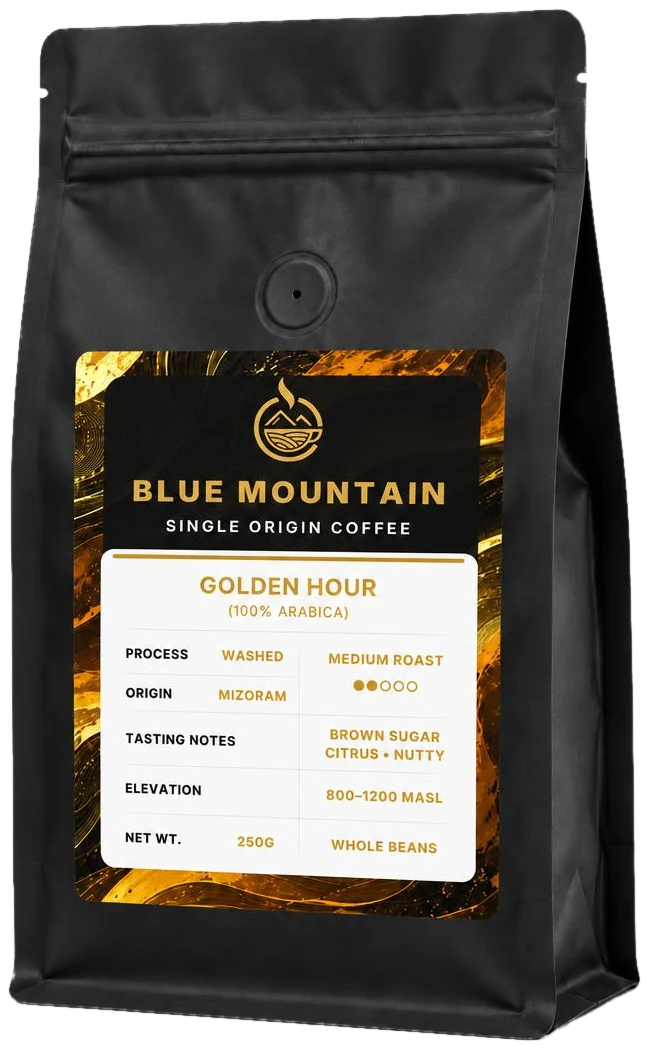
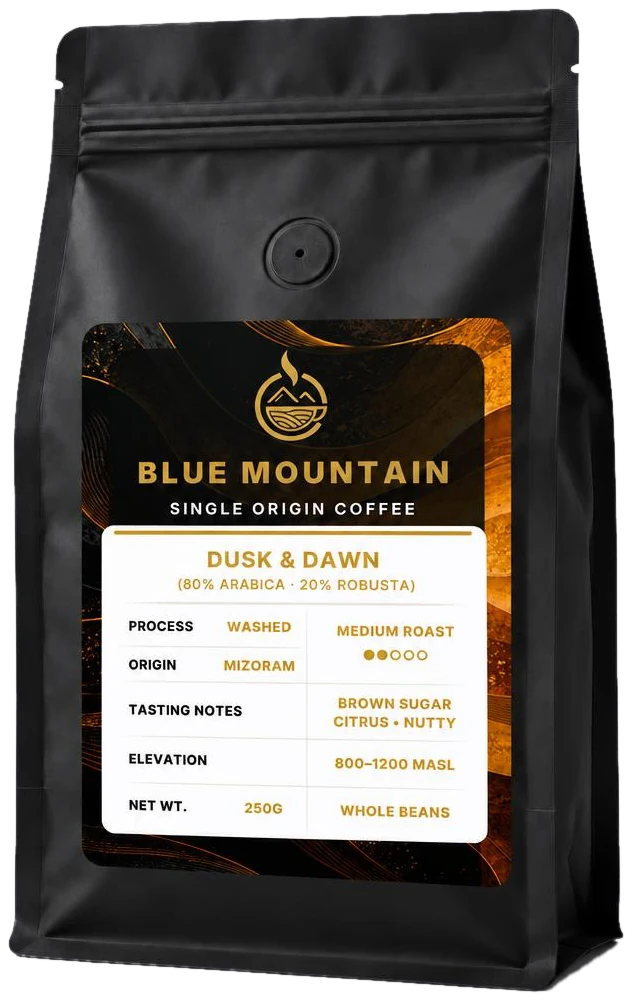
We describe our coffee by origin, variety and taste: Mizoram Arabica of Chandragiri, Hybrid, SLN 9 and SLN 13, small-batch roasted in Aizawl, with brown sugar, citrus and nutty notes. We do not publish cupping scores.
Coffees for this
Common questions
- Is all Arabica specialty coffee?
- No. Specialty depends on the score and defects, not just the species.
- Is specialty coffee more expensive?
- Usually, because it takes more careful farming and sorting. Price per cup is often still lower than a cafe coffee.
- Do you sell specialty coffee?
- We sell traceable Mizoram coffee with named varieties. We do not publish cupping scores, so we let you judge by taste.
- Does India produce specialty coffee?
- Yes, across the south, Araku, Koraput and the Northeast hills.