Four things that decide Arabica quality
Ignore packaging language and check these instead.
- Origin and altitude: higher-grown beans are denser and sweeter. Ours sit between 800m and 1,600m in Mizoram.
- Varieties: our Mizoram lots include Chandragiri, Hybrid, SLN 9 and SLN 13.
- Roast date and batch: ask how often the roaster runs a batch. We roast two to three times a month.
- Cup notes stated honestly: ours are nutty and cocoa-forward with a light citrus lift, not berry or floral.
Arabica vs Robusta, briefly
Arabica gives sweetness, clarity and aroma with roughly half the caffeine of Robusta. Robusta gives body, crema and a harder punch. Our 100% Arabica suits pour-over, French press and anyone who drinks coffee black. The 70/30 and 80/20 blends add Robusta for milk drinks and espresso.
Choosing a roast
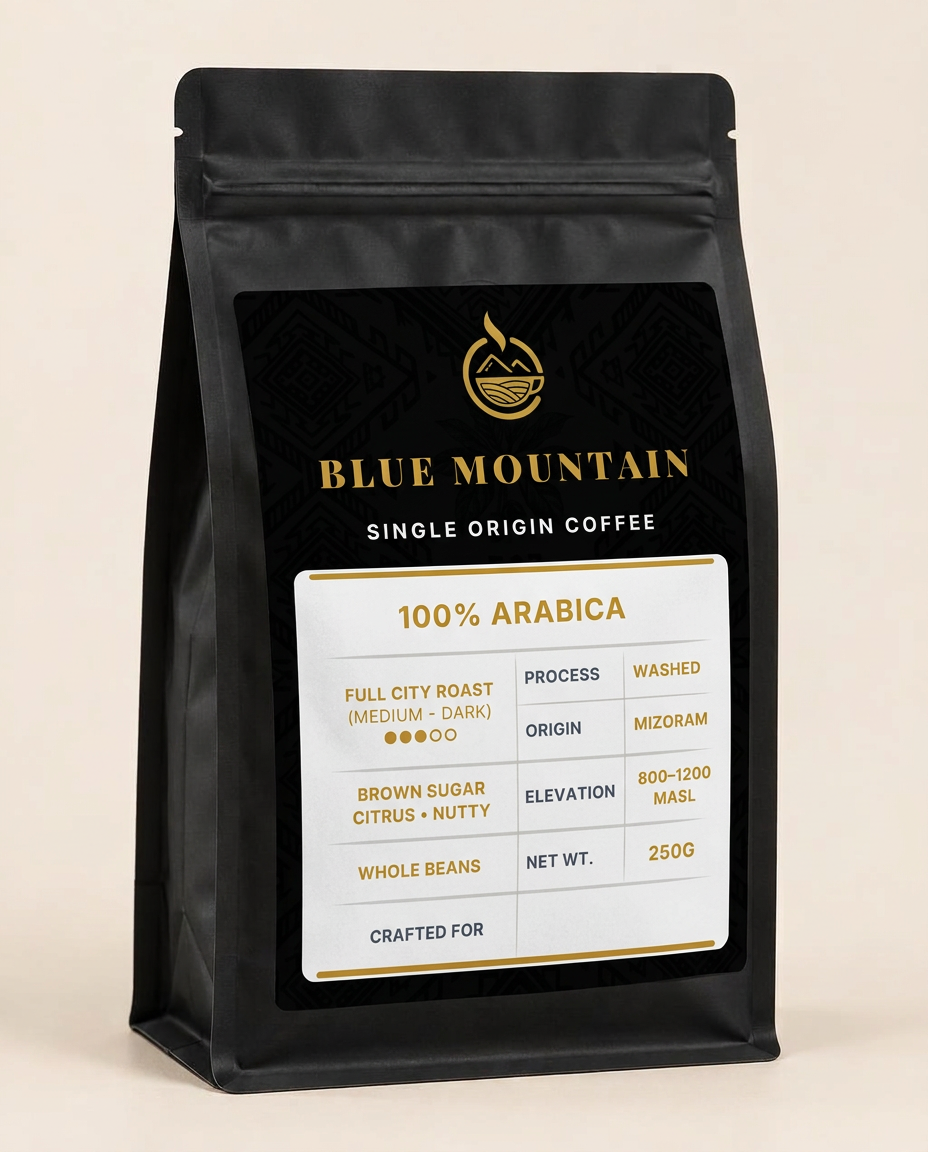
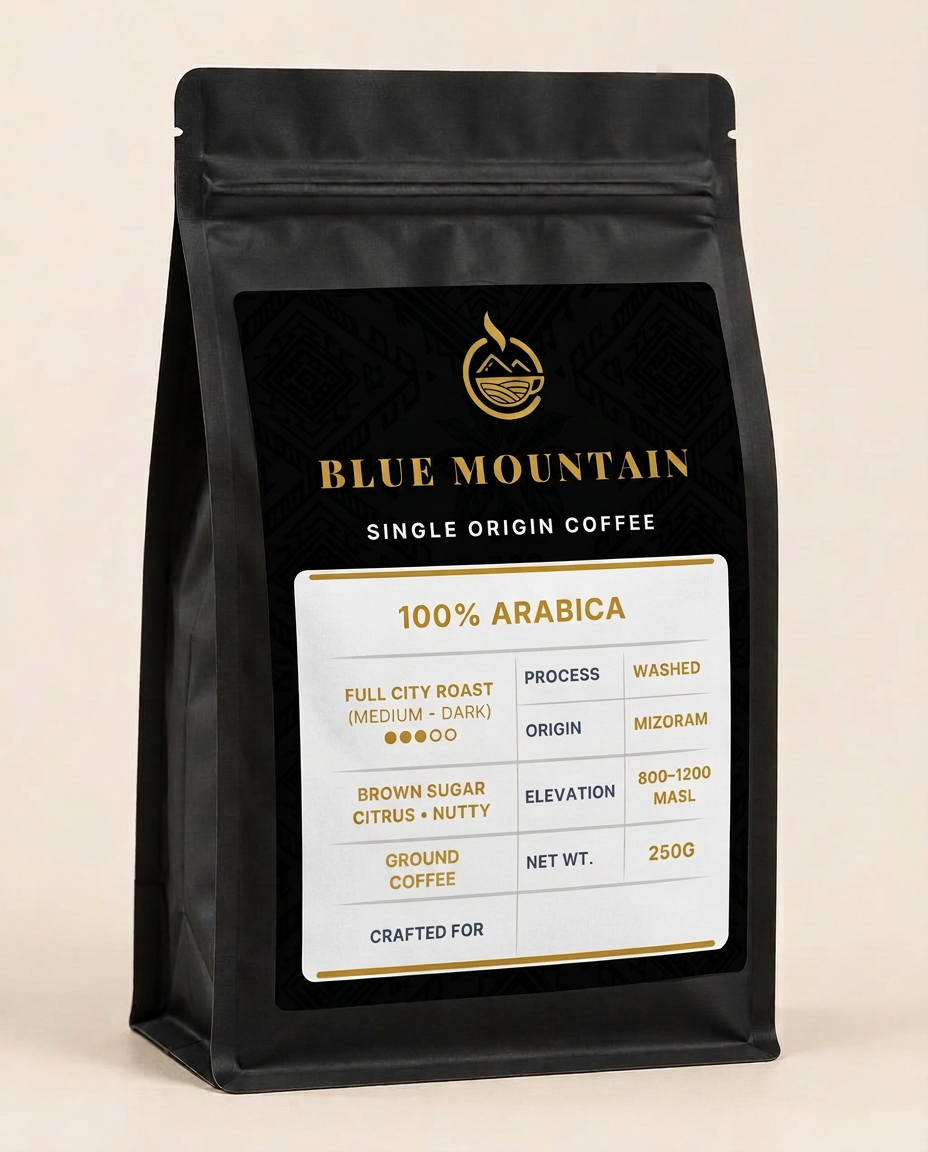
Medium keeps the citrus brightness and suits filter brewing. Full City (Medium-Dark) is our most popular: nutty, cocoa, balanced, good with milk. Dark is for strong South Indian style coffee and moka pots.
Coffees for this
Common questions
- Is your Arabica the same as Jamaica Blue Mountain?
- No. Blue Mountain is our company name. Our coffee is Indian Arabica grown in Mizoram, not Jamaican Blue Mountain coffee.
- Which coffee varieties do you source?
- Our Mizoram coffee includes Chandragiri, Hybrid, SLN 9 and SLN 13 varieties. Availability can vary by harvest and lot.
- Does 100% Arabica mean less caffeine?
- Yes, roughly 1.2-1.5% caffeine against Robusta 2.2-2.7%. A cup of our Arabica is gentler than a Robusta-heavy blend.